
Every spring, my
parents ask the same question: "Which summer program will look best on the application?"
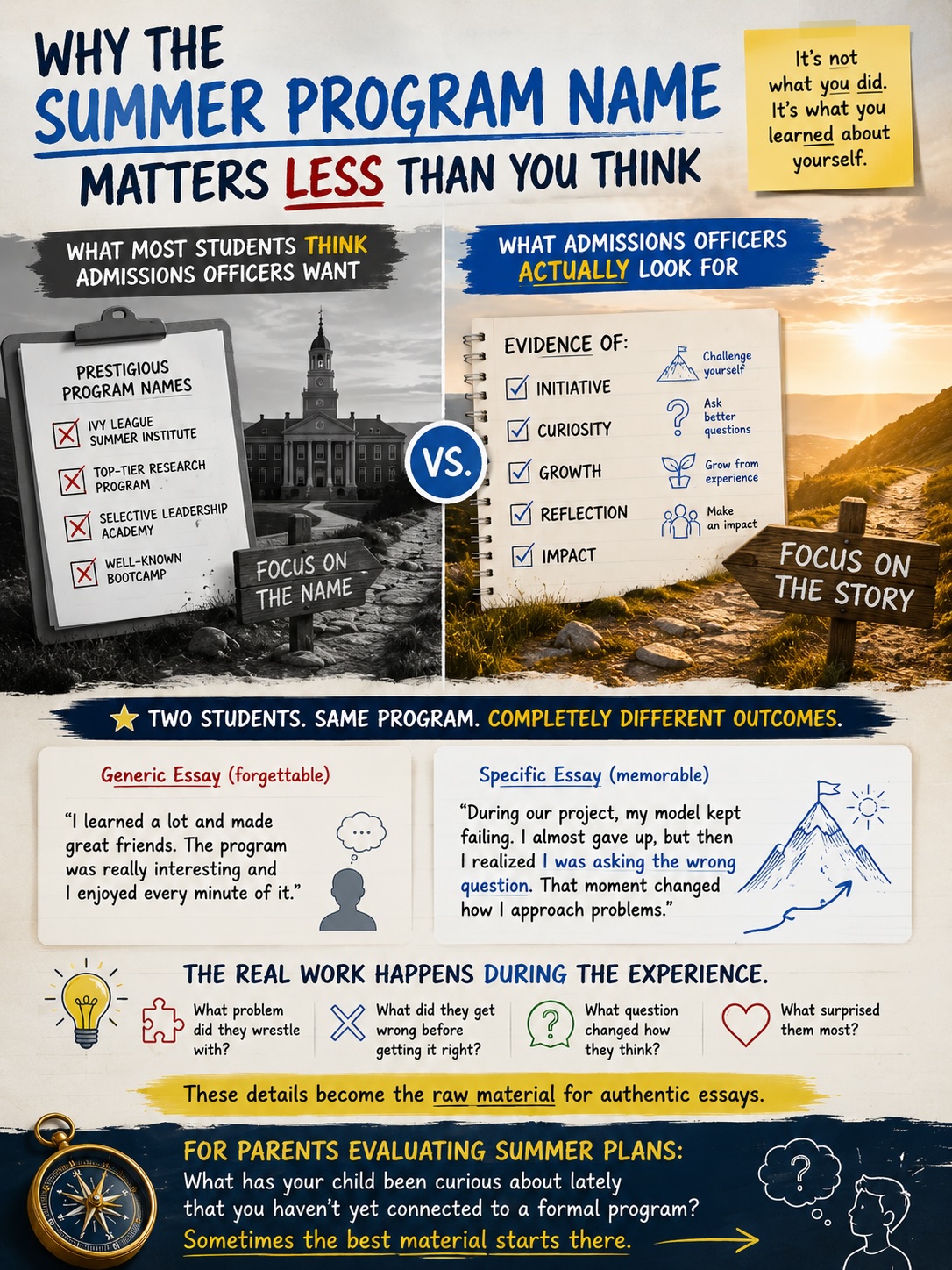
I understand the instinct. But admissions officers read thousands of essays and activity lists each cycle, and a consistent theme emerges in their guidance: they're not scanning for prestigious program names. They're looking for evidence of initiative, curiosity, and growth — and that evidence only exists if a student writes about it well.
Here's the distinction that matters: a program is an experience. The essay is the narrative built from that experience. Two students can attend the identical summer program and produce completely different applications — one describes it generically ("I learned a lot and made great friends"), while the other shows a specific moment of struggle, a decision they made, a question that changed how they think.
Admissions readers consistently respond to the second version, regardless of the program's name recognition.
This means the real work isn't just choosing the "right" program — it's paying attention during the experience. What problem did your child wrestle with? What did they get wrong before getting it right? What surprised them?
Those details become the raw material for authentic essays later.